
Why Don’t Data Leaders Trust AI? And Other Insights From Our 2026 AI Survey

Simba helps builders embed trusted intelligence into every product, so they can deliver consistent, trusted answers in a world running on AI.

Ever since AI-driven analytics burst onto the scene, product leaders have been racing to adopt it. Promoted as a way to stay ahead of the curve, AI analytics bring the promise of streamlined processes, personalized recommendations, and a more efficient user experience. But AI advancements aren’t without pitfalls, chief among them inaccuracies caused by AI hallucinations and pilot projects not making it to production.
To measure how data decision-makers use AI in 2026 and gauge their level of trust in AI-driven results, insightsoftware conducted a survey of 114 data and analytics leaders. How do data leaders really feel about AI and what are the biggest barriers to trust?
Here are our key findings.
Only Half (51%) of Organizations Trust AI-Generated Insights
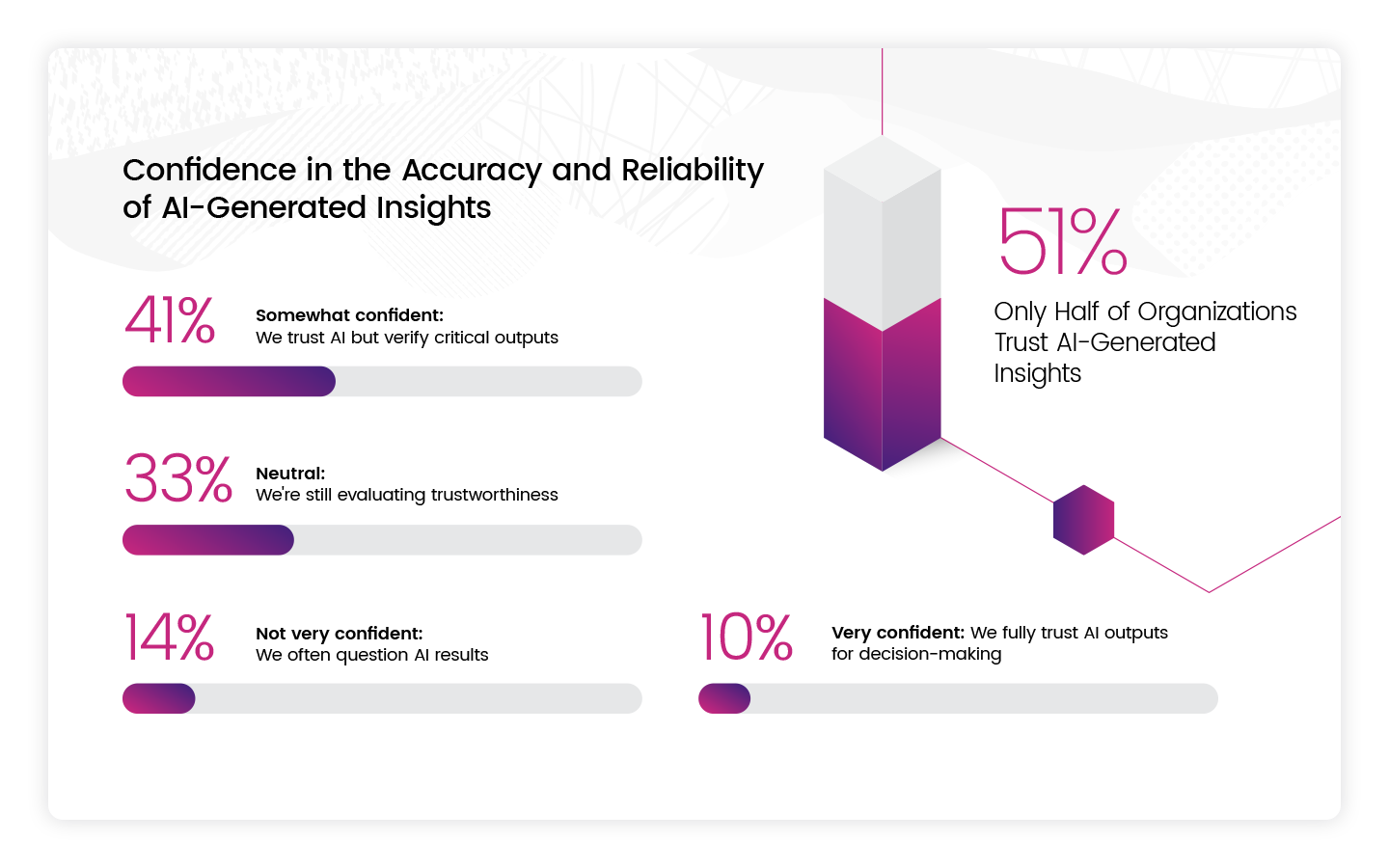
When it comes to confidence in the accuracy of AI-driven results, data leaders aren’t so sure. According to our survey, only half (51%) trust AI-generated insights. This reflects serious AI challenges like AI hallucinations, which is what happens when AI shares inaccurate information.
This pitfall of generative AI technology is ingrained into its DNA. AI is designed to give confident answers, but confidence isn’t the same as accuracy. When an AI system doesn’t know, it’s programmed to come up with a response instead of simply saying it doesn’t have all the information it needs. Why is this?
Without a live data connection, your model must guess. AI creates believable responses from training patterns because it can’t access your real-time enterprise systems to verify facts.
Business logic gaps produce wrong calculations. Models generate answers that ignore your company’s specific rules, formulas, and compliance requirements embedded in production systems.
Governance blocks create blind spots. Security teams correctly restrict database access, leaving models unable to cross-check responses against actual source data.
Enterprise complexity overwhelms pattern matching. Hundreds of related tables with custom joins and dependencies require deep context that models lack without proper semantic mapping.
The Future of AI in the Enterprise
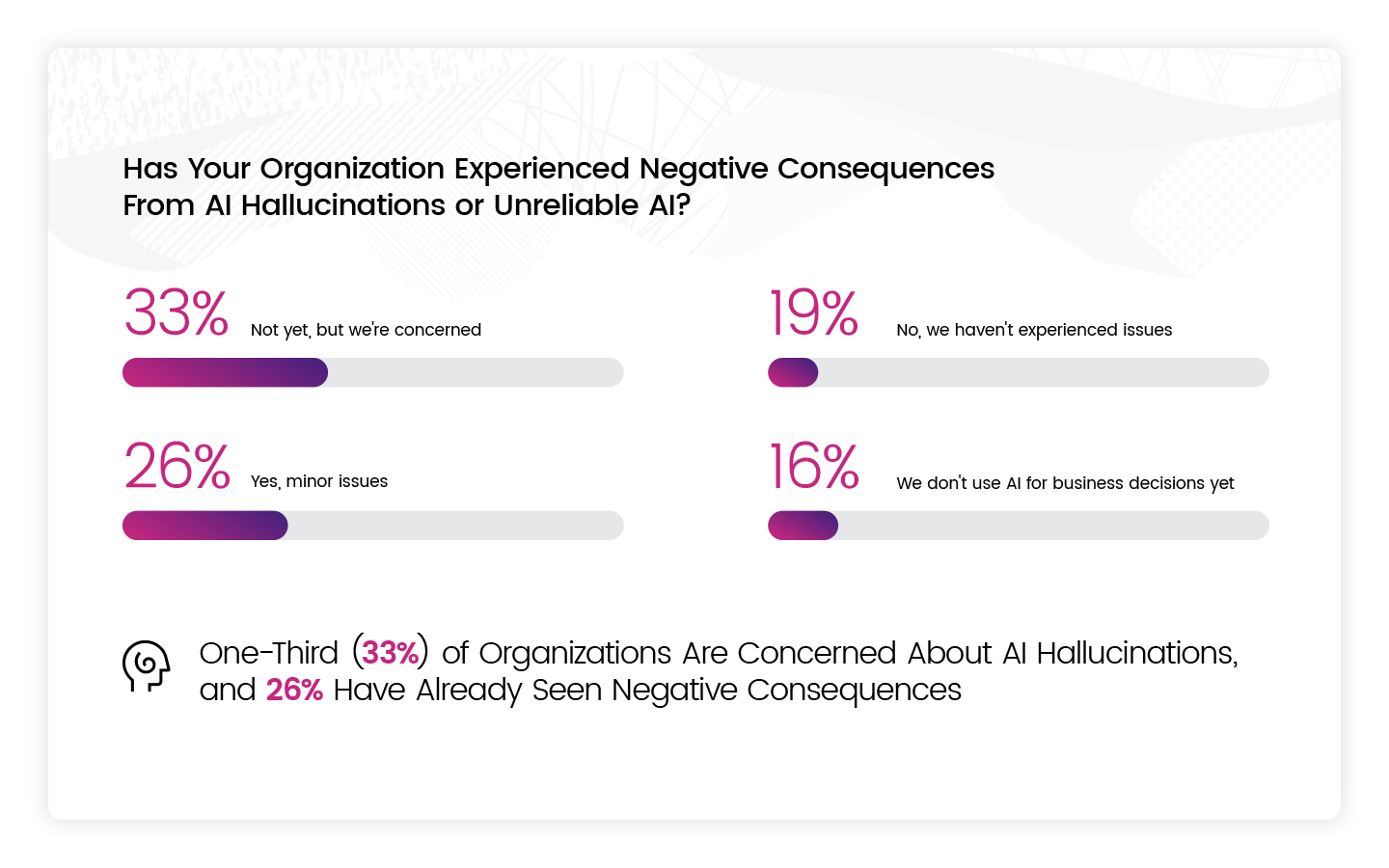
In fact, our study shows that one-third (33%) of organizations are concerned about AI hallucinations, and 26% have already seen negative consequences. Only 19% haven’t experienced any issues.
Barriers to Trust
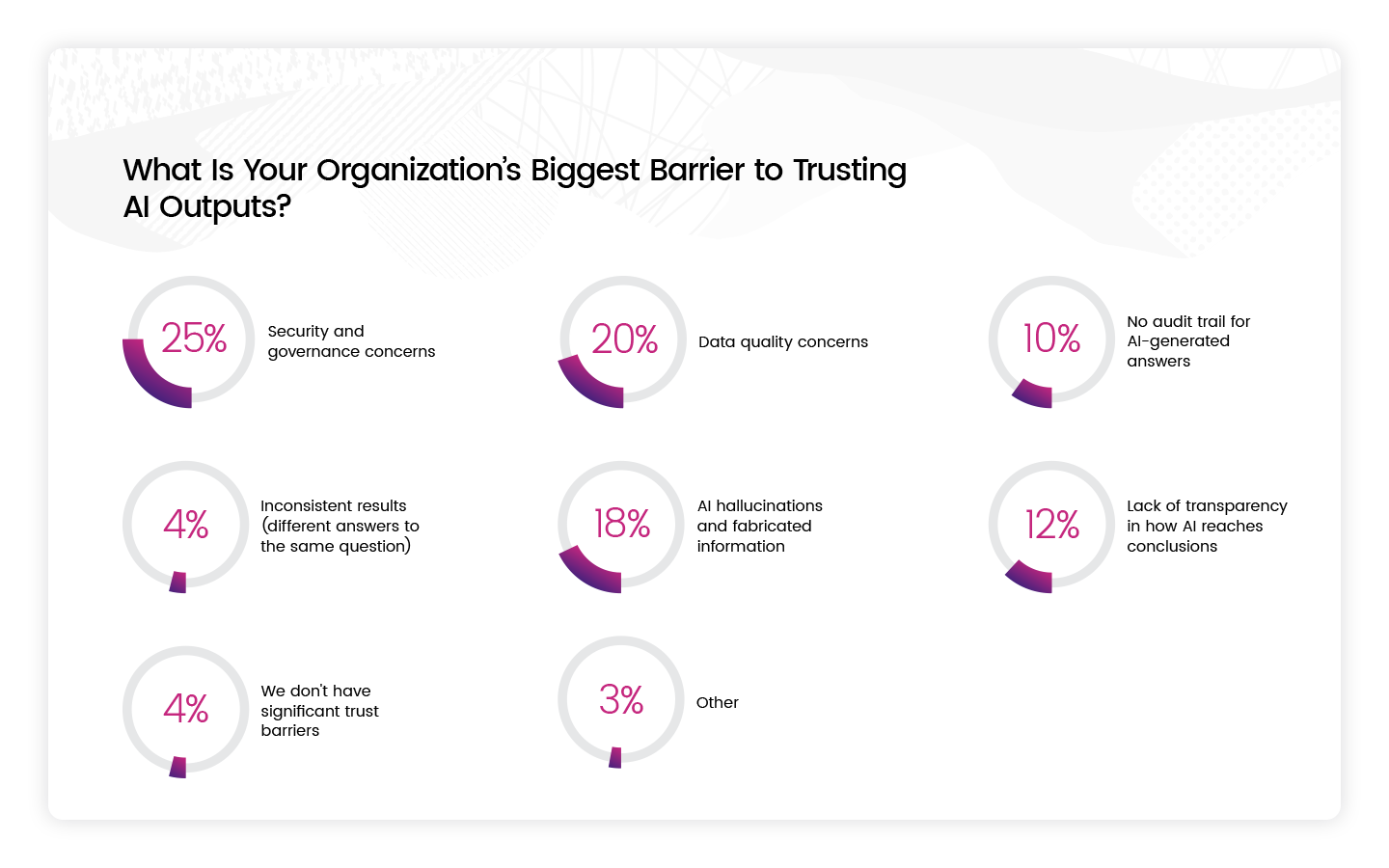
When asked about why half of organizations don’t trust AI outputs, data leaders cited security and governance concerns as the top reason.
Organizations need accurate data and analytics in order to survive and continue growing. But is the answer to abandon AI? Not necessarily, but data teams need more than AI alone to trust in the data. According to the survey, there are opportunities to improve trust in AI systems.
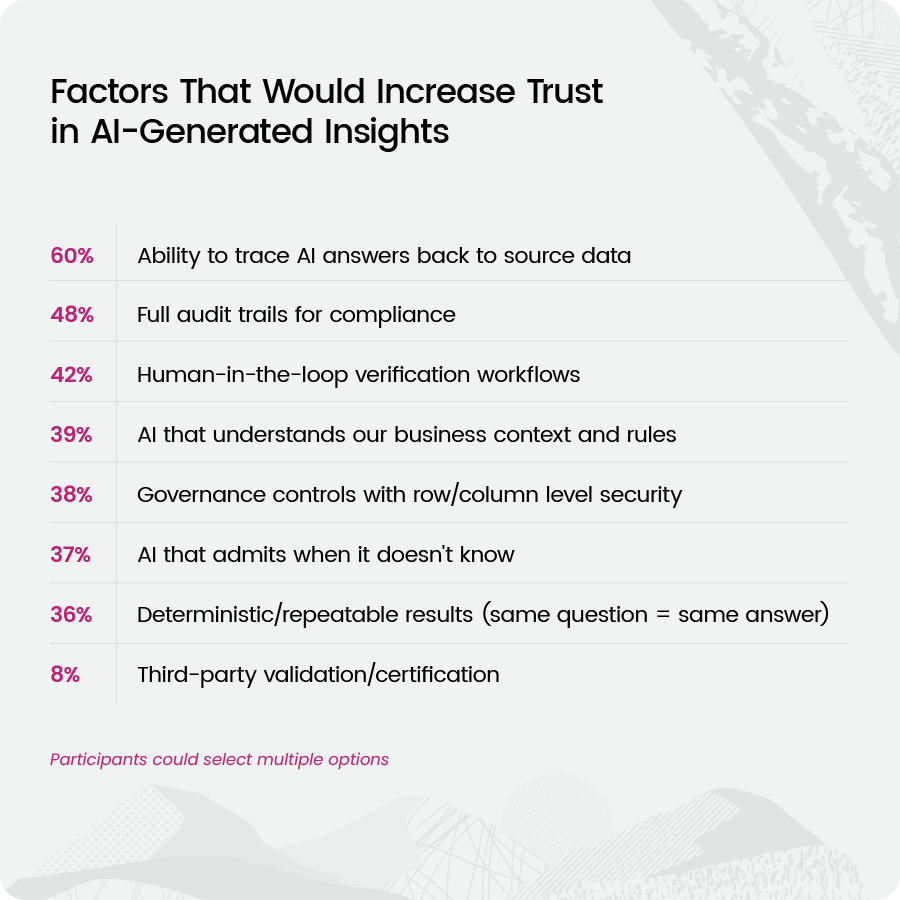
To increase trust, data leaders need AI that traces back to source data with full audit trails. With the ability to cross-check AI-generated information with source data, data teams can verify that answers aren’t hallucinated, proving information to the people that matter, such as stakeholders and governing bodies.
This is especially important with new regulations like the EU AI Act, which organizations doing business in the European Union (EU) must adhere to whether or not they’re actually located within the EU.
All organizations are focused on practicing good governance. On top of being a necessity, strong governance practices save organizations time and money when it comes to passing audits and avoiding noncompliance fines. When it comes to AI, these are the top five governance priorities for data leaders:
Data residency/sovereignty compliance | 54% |
Verifiable/deterministic AI outputs | 51% |
Audit trails for AI-generated answers | 53% |
User permission controls for AI data access | 43% |
Compliance with industry regulations (GDPR, HIPAA, SOX, etc.) | 37% |
Failure to Launch
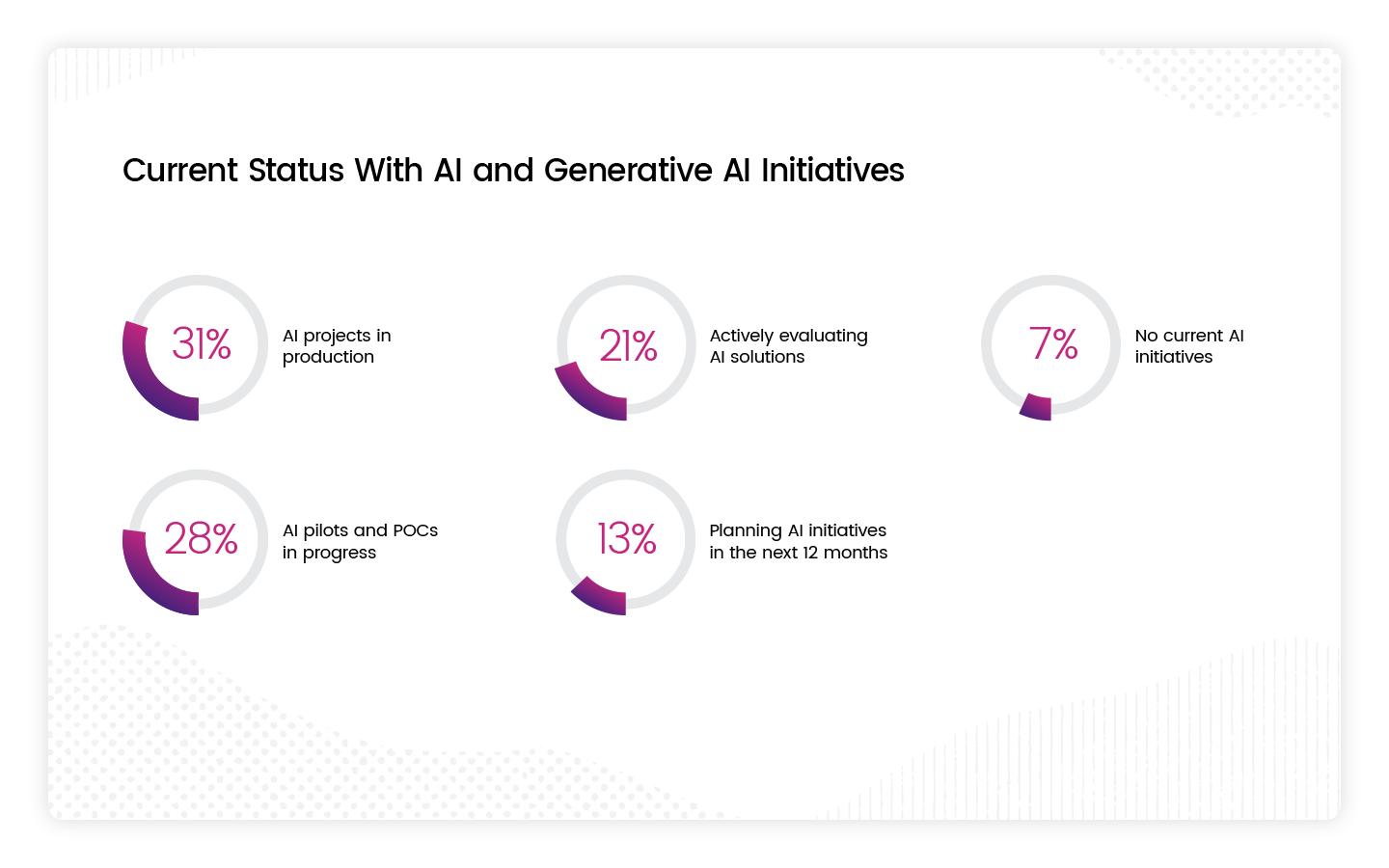
Another widespread AI roadblock is pilot projects not making it to production. The data leaders we surveyed say that only a third (31%) of their AI projects have made it past the pilot stage.
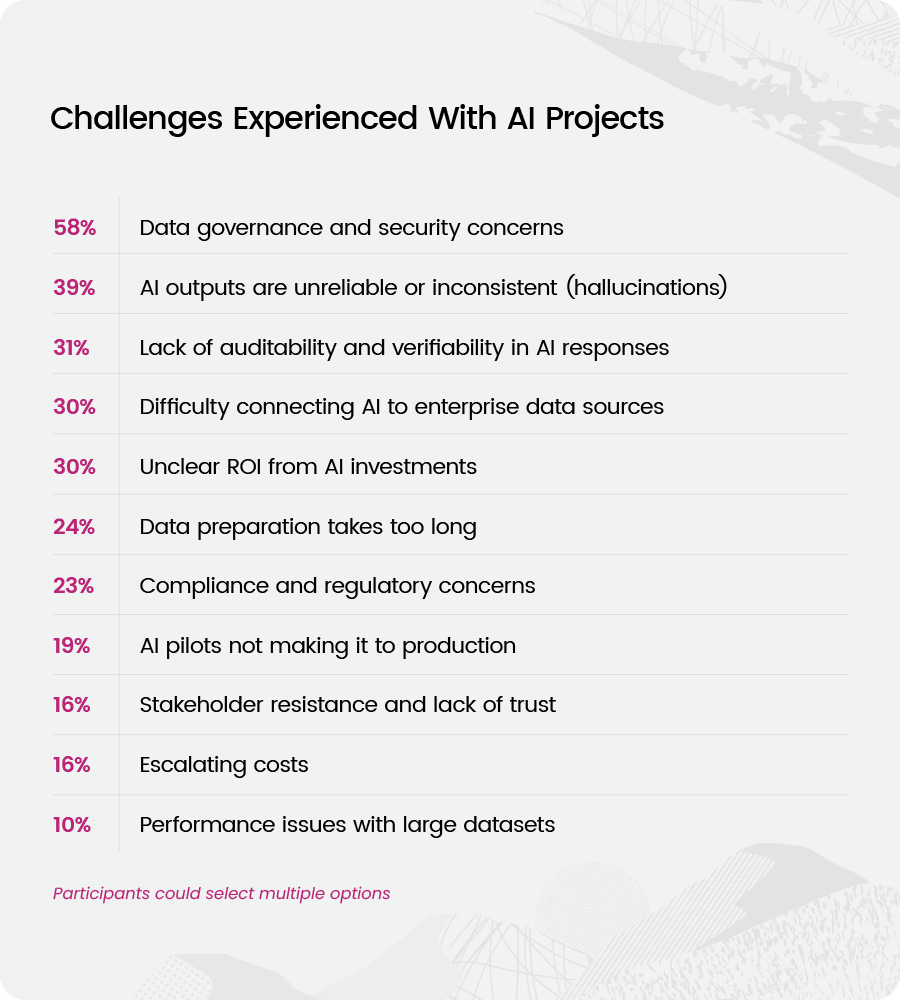
This can happen for a variety of reasons. When asked, those we surveyed said security and governance challenges are their biggest concerns (58%), followed by inaccurate or inconsistent AI outputs (39%), and a lack of ability to verify results (31%).
Another challenge in moving projects from pilot to production is the time it takes to prepare data for AI. Of those we surveyed, two-thirds (63%) say preparing data for AI consumption causes delays.
The AI Trust Problem: Why Almost 90% of AI Projects Fail Before They Start
Cloud, On-Prem, or Hybrid?
Another reason organizations run into problems when deploying AI is restrictions caused by their analytics or BI platforms’ cloud environment. While a portion of organizations work in the cloud, others must work in an on-premises or hybrid environment by necessity. Some work best with a hybrid model because some departments work in the cloud while others stay on-premises, and others need to remain on-premises due to being in highly-regulated industries such as healthcare or finance.
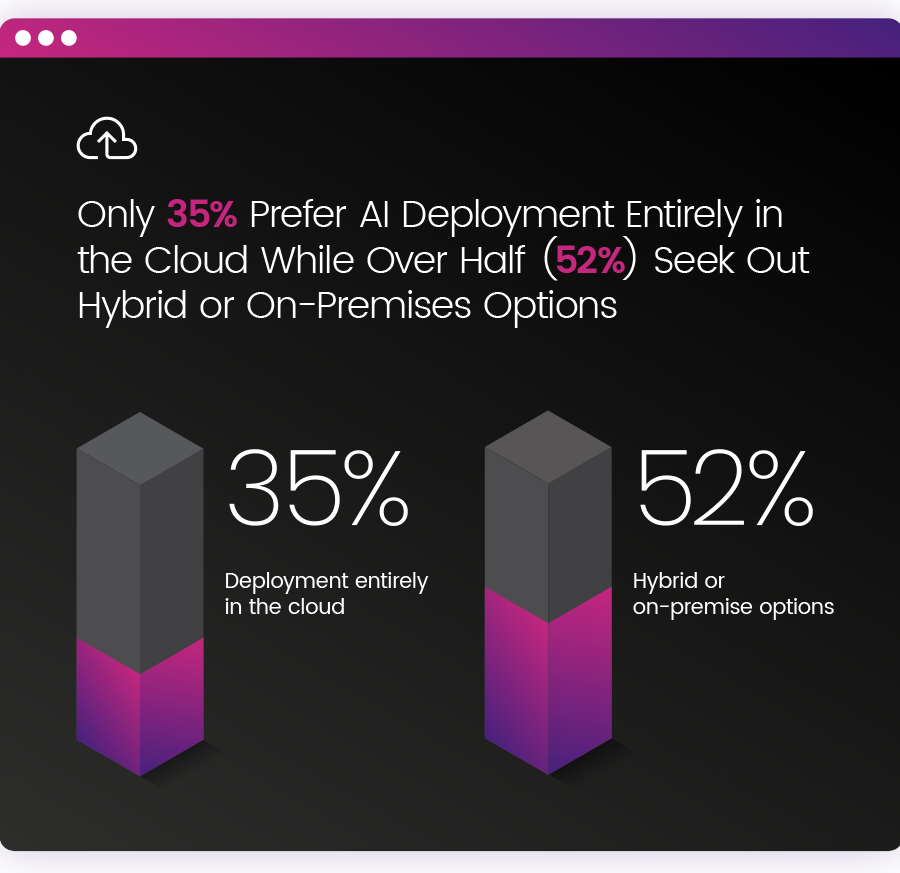
Organizations need flexibility when it comes to AI analytics. But problems arise when vendors force you into their ecosystem. If you choose their BI, it forces you to use their cloud regardless of whether it’s the best fit for your strategy.
When faced with challenges like hallucinations and inaccuracies, filling in AI governance gaps, and vendors locking you into their cloud model, how can you make valuable use of AI analytics and actually trust the data it gives you?
Adding a semantic layer can help you overcome these AI-related frustrations. Simba Intelligence reduces AI hallucinations by connecting directly to enterprise data. Its answers are tied to live data and show the information trail so that your users can easily track, verify, and stand by results. While traditional BI tools surface dashboards and data integration tools move data, Simba Intelligence connects AI directly to governed enterprise data without copying or losing control.
With Simba Intelligence analytics insights, you can:
Get deterministic, auditable answers you can trust for business-critical decisions.
Fill security and governance gaps by querying data securely in place across diverse sources, removing the need for copies and ensuring governance is applied consistently at the source.
Relieve overloaded data engineering teams by delivering governed, ready-to-use data in place, freeing your team to focus on higher-value tasks.
Protect operational systems with performance and access safeguards, providing controlled, governed access without slowing down critical operations.
Meet users where they are on their cloud journeys without vendor lock-in by supporting public cloud, private cloud, on-premises, and hybrid deployments. This gives enterprises full control over data residency and compliance.
Ready to learn more? Read our infographic with the full survey results.