
Using Business Intelligence in Demand Forecasting

insightsoftware is the most comprehensive provider of solutions for the Office of the CFO. We turn information into insights, empowering business leaders to strategically drive their organization.
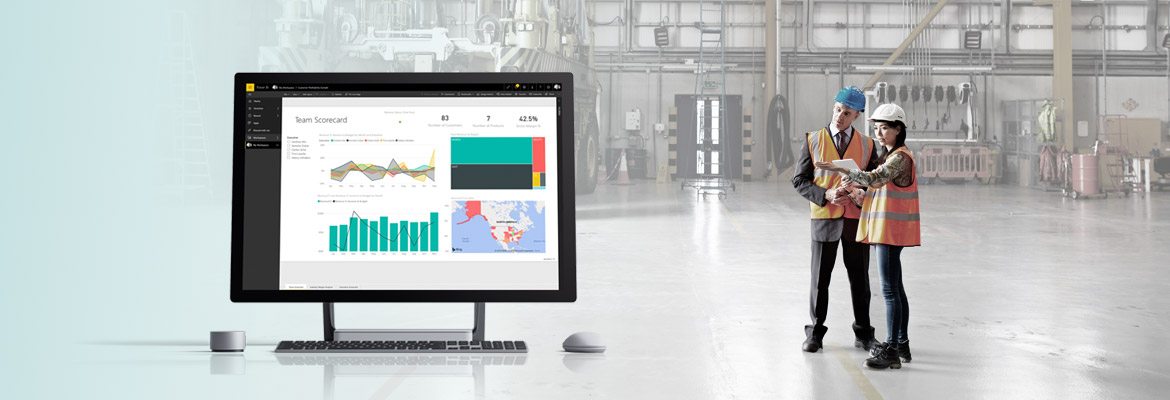
With major advances being made in artificial intelligence and machine learning, businesses are investing heavily in advanced analytics to get ahead of the competition and increase their bottom line. One of those areas is called predictive analytics, where companies extract information from existing data to determine buying patterns and forecast future trends.
By using a combination of data, statistical algorithms, and machine learning techniques, predictive analytics identifies the likelihood of future outcomes based on the past. This technology is being used in every industry, from banking to retail to determine customer responses or purchases, forecast inventory, manage resources, and even detect fraud.
Although it’s been around for decades, predictive analytics is becoming more and more mainstream, with growing volumes of data and readily accessible software ripe for transforming. In this blog post, we are going to cover the role of business intelligence in demand forecasting, an area of predictive analytics focused on customer demand. We’ll explain what it is, how it works, and ways to start using demand forecasting with business intelligence software.
What is Demand Forecasting?
Demand forecasting involves anticipating future customer demand for products or services, using data-driven insights to inform decisions. It focuses on understanding what consumers are likely to want, when they’ll want it, and in what quantities. By analyzing historical trends, market conditions, and external factors, businesses can make informed predictions that help align supply with demand.
This practice is essential for avoiding the risks of overproduction, understocking, or missed opportunities in a competitive market. Beyond predicting specific product sales, demand forecasting can also be applied on a broader scale, such as understanding trends within entire product categories or industries. While forecasting inherently involves some degree of uncertainty, advancements in tools and methodologies have made it increasingly accurate and reliable.
What is Demand Forecasting Analytics?
Demand forecasting analytics represents a modern evolution of traditional demand forecasting, combining advanced analytical tools, machine learning, and real-time data to refine predictions. Unlike basic forecasting methods, this approach goes beyond historical data and incorporates external factors like economic indicators, seasonal variations, and even social trends. By leveraging predictive models, demand forecasting analytics can detect hidden patterns and generate actionable insights faster and more accurately than traditional techniques.
This methodology empowers organizations to adapt dynamically to changing market conditions, ensuring they can meet customer needs while minimizing waste and inefficiencies. Demand forecasting analytics is especially valuable for industries with volatile demand or complex supply chains, as it helps identify risks and opportunities in real-time. As businesses increasingly adopt data-driven strategies, demand forecasting analytics serves as a cornerstone for optimizing production, inventory, and overall operational efficiency.
Why Use Demand Forecasting?
As an essential component of supply chain planning, demand forecasting is used by manufacturers, distributors, and retailer to provide insight into their operations and to make informed, profitable decisions on pricing, inventory stock, resource optimization, and more.
Here are some of the major reasons why demand forecasting is crucial to supply chain success in this day and age:
Increased customer satisfaction (i.e providing customers with the products they want when they want it)
Inventory optimization to reduce stock-out and overstocking
Fast turnaround in order fulfillment
Effective production scheduling of raw material and labor
Better capacity planning and allocation of resources
Improved distribution planning and logistics
Effective pricing and promotional planning
Why Demand Forecasting is Important
Demand forecasting is essential for businesses to make informed decisions that align with customer needs and market trends. Accurate forecasts enable organizations to plan production, allocate resources, and manage inventory effectively, reducing the risk of stockouts or overproduction. It also helps companies optimize supply chain operations, ensuring that goods are available when and where they are needed. Beyond operational efficiency, demand forecasting supports strategic decisions such as financial planning, marketing initiatives, and capacity expansion, ultimately driving profitability and customer satisfaction.
By predicting future customer needs, businesses can align their operations with market demands, ensuring efficiency and competitiveness. It is a critical tool for mitigating risks, improving financial stability, and delivering customer satisfaction, making it indispensable in both short-term and long-term strategies.
Optimizes Inventory Management: Predicting customer needs helps businesses reduce stockouts and minimize excess inventory, leading to better resource allocation.
Reduces Operational Inefficiencies: Forecasting ensures smoother production schedules and supply chain operations, avoiding costly disruptions.
Enhances Financial Planning: Reliable forecasts guide budgeting and investment decisions, reducing financial uncertainty.
Improves Customer Satisfaction: Meeting demand accurately builds trust and loyalty, ensuring products and services are available when needed.
Drives Strategic Growth: Businesses can plan expansions and new product launches with greater confidence based on demand insights.
Supports Sustainability Goals: By reducing waste and overproduction, demand forecasting contributes to environmental and economic sustainability.
The Challenges of Demand Forecasting
Achieving accurate demand forecasts is no small feat, as it requires balancing multiple dynamic variables and data sources. Businesses often contend with unpredictability in market trends, consumer behavior, and external influences such as economic shifts or global events. These challenges require robust tools, collaboration, and adaptability to overcome effectively.
Data Limitations: Incomplete, outdated, or inconsistent data can undermine the accuracy of forecasts and lead to poor decision-making.
Market Volatility: Sudden changes in market conditions, such as economic downturns or disruptions, can render forecasts obsolete.
Seasonality and Trends: Fluctuations in demand due to seasons or shifting consumer preferences can complicate long-term predictions.
Collaboration Gaps: Misalignment between departments like marketing, sales, and operations can reduce the effectiveness of forecasting efforts.
Technological Barriers: Insufficient access to advanced tools or expertise can hinder the ability to leverage predictive analytics effectively.
Over-Reliance on Historical Data: Focusing too heavily on past trends may fail to account for emerging market shifts or external disruptions.
The Benefits of Demand Forecasting
Demand forecasting empowers businesses to stay ahead of market trends and consumer needs while enhancing overall efficiency. By offering actionable insights, it enables companies to make smarter decisions, reduce risks, and position themselves as leaders in their industry. The benefits span across operational, financial, and strategic domains, creating a competitive edge.
Improves Inventory Management: Reduces excess stock and minimizes shortages, ensuring optimal inventory levels.
Boosts Customer Satisfaction: Ensures timely availability of products and services, leading to improved customer trust and loyalty.
Enhances Financial Stability: Provides a reliable foundation for budget planning, reducing uncertainty and enabling better investment decisions.
Reduces Operational Waste: Aligns production and supply chain operations with actual demand, cutting unnecessary costs and inefficiencies.
Increases Agility: Helps businesses respond quickly to market changes and customer needs, maintaining a competitive edge.
Supports Long-Term Planning: Offers insights that guide strategic initiatives, such as product launches or market expansions.
Best Practices of Demand Forecasting
Effective demand forecasting requires a combination of data-driven strategies, advanced technologies, and cross-functional collaboration. By following best practices, businesses can ensure that their forecasting efforts are accurate, actionable, and aligned with organizational goals. Continuous refinement of methods and models is key to maintaining relevance in changing market conditions.
Use Diverse Data Sources: Combine historical sales data, market trends, and real-time analytics to create comprehensive forecasts.
Leverage Advanced Technology: Incorporate machine learning, AI, and predictive analytics to identify patterns and improve accuracy.
Segment Forecasts: Break down forecasts by regions, products, or customer groups to gain more specific and actionable insights.
Collaborate Across Teams: Align sales, marketing, operations, and finance to ensure forecasting reflects all aspects of the business.
Monitor and Refine Models: Regularly update forecasts based on new data and changing market conditions to improve reliability.
Prepare for Uncertainty: Use scenario planning and risk assessments to anticipate and mitigate potential disruptions.
Using Demand Forecasting with Business Intelligence
Demand forecasting relies on data. If there is anything wrong with the data you use, the math and how you implement it will result in underestimated or overestimated demand, leaving you with a bunch of unhappy customers or a surplus of product. In order to understand demand and accurately predict supply, most companies adopt a business intelligence solution to assist with data preparation, data consolidation, analysis, and reporting.
BI software is built to collect, unify, sort, tag, analyze, and report on vast amounts of data. Here are the four major areas where BI can help you get started with accurate demand forecasting:
Data Preparation
Most companies don’t take the time to cleanse, validate, and audit their data regularly. As a result, 40 percent of enterprise data is either inaccurate, incomplete, or unavailable (Gartner). BI software is used to organize and control your data in one solution, so you’re building your analytics off accurate data. Learn more about master data management here.
Data Consolidation
A data warehouse can help you collect business data from multiple sources and use it for accurate reporting and analytics. BI powered by data warehouses can better correlate data from disparate systems and provide greater insight into the supply chain, sales, financials, etc. Learn more about data warehouses here.
Data Analysis
BI software is designed for complex analysis and calculations of large data sets. Establishing a system of record, including historical data and multiple data sources, guarantees that everyone is using one version of the truth to run their reports. Check out a demo of insightsoftware's corporate BI and reporting solution here.
Reporting
BI software gives you a single view into performance, with pre-built dashboards and reports for quick sharing and dissemination of real-time information on demand. This allows for better planning and more collaboration between your suppliers.
Get a better understanding of what you need to do to improve your data quality and prepare your data for accurate demand forecasting. At insightsoftware, we can help you assess your current systems and show you how business intelligence can build the data foundation for your business. For more information, contact our team or read some of our related resources!
Related Resources
From AI to BI: Misunderstood Applications of Business Intelligence
Business Intelligence Trends in 2019
Prepare Your Data for Accurate Business Analytics and Intelligence
Avoid 3 Common Mistakes That Cause Business Intelligence Failure