
Demand Planning and Forecasting: The Key to Supply Chain Challenges

insightsoftware is the most comprehensive provider of solutions for the Office of the CFO. We turn information into insights, empowering business leaders to strategically drive their organization.

For years, business leaders have struggled with the challenges of getting the right product to the right place at the right time. When a company ends up with too much inventory on hand, its capital is tied up in goods stored in the warehouse, so it can’t be put to use elsewhere. Instead of paying down debt, saving on interest expense, and preserving liquidity; its cash is committed to maintaining bloated levels of inventory. What’s even worse, inventory on hand may become obsolete, losing value as it sits on the shelf. Perishable goods, or anything with an expiration date, may lose its value altogether if held for too long.
There is equal danger in not having enough inventory on hand. Generally speaking, you can’t sell what you don’t have. Customers may come to you looking for a particular product, and if you can’t deliver it, they may go to your competition instead. In many cases, you’re not just losing an individual sale–you’re losing the customer.

Since 2020, global supply chains have been especially problematic. Factory shutdowns, shipping bottlenecks, and shortages of raw materials have led to substantial uncertainty for businesses seeking to address the vicissitudes of supply-side availability. In the traditional dynamics of supply and demand, this can often lead to price increases, which can further erode margins and profitability.
What is Demand Planning and Forecasting?
Demand planning is the process of managing equilibrium between a company’s supply of product and the inventory required to meet customer demand. Simply put, demand planning ensures that a company has exactly as much inventory as it needs—no more and no less. This balance is critical for optimizing resources and maintaining efficiency within the supply chain.
To achieve this, supply chain managers must forecast demand by considering various factors, including historical sales data, market dynamics, and external influences that could impact product demand. These factors may include major weather events, such as hurricanes or winter storms, economic trends like inflationary pressures, workforce disruptions due to labor disputes, shipping and customs backlogs, and global emergencies such as regional conflicts or a worldwide pandemic.
By accurately predicting these variables, companies can develop models that improve over time, allowing them to become more adept at aligning supply with customer demand.
Why Use Demand Planning and Forecasting?
The ability to accurately predict demand and adjust supply accordingly is crucial for supply chain efficiency and profitability. Effective demand planning and forecasting allow companies to get the right product to the right place at the right time, minimizing costs associated with excess inventory or stockouts. This is particularly important in scenarios where consumer demand can fluctuate dramatically due to unforeseen events.
For instance, companies like Walmart, known for their efficient supply chain management, frequently reposition inventory based on regional events. An impending hurricane may lead customers to stock up on essentials like batteries, flashlights, bottled water, ready-to-eat foods, and electrical generators. By analyzing historical data and market trends, Walmart can predict which products will be in high demand, where they will be needed, and when.
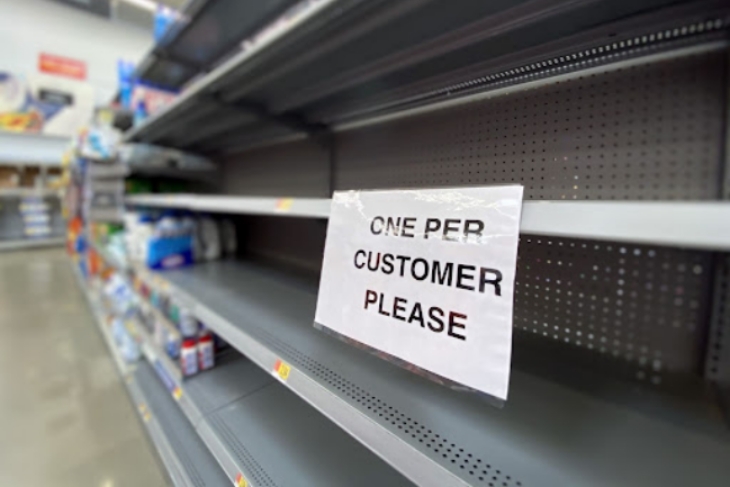
Although it might seem easier to build up a safety stock of these items in advance, doing so ties up capital, consumes valuable warehouse space, and risks inventory losing value over time. Therefore, demand planning and forecasting not only facilitate more efficient inventory management but also enhance the company’s ability to serve its customers effectively, leading to a win-win situation where customers have access to the products they need, and the company can maximize its sales and profitability.
The Four Elements of Demand Planning
Demand forecasting is about predicting potential spikes or troughs in demand. Demand planning goes much further, though, encompassing four major subcategories of activity:
Statistical Demand Forecasting
Statistical demand forecasting involves the traditional analysis of historical data to predict future demand. This may include the use of complex formulas and algorithms to extrapolate future demand based on past history. This process requires highly accurate data that is as up-to-date as possible. For many companies, statistical demand forecasting is an excellent starting point for improving supply chain efficiency.
Demand Sensing
Demand sensing describes the processes discussed earlier—that is, using a combination of external data sources to predict fluctuations in demand, including weather, global events, and economic trends. Ideally, this should be done in real time, or as close to real time as possible. After all, it does little good to ship batteries and generators to a location several weeks after it has experienced a hurricane. Companies that can sense changes in demand most accurately and respond faster than the competition will win more business and operate more efficiently.
Product Portfolio Management
Product portfolio management addresses the bigger picture of the product life cycle, from the initial introduction of a new product through its discontinuation. Families of products can often be interdependent. For example, the sales of a new mobile phone may often be accompanied by a spike in demand for earphones designed to work with the phone. Similarly, the sales of auto parts for older vehicles will decline as new models supersede them. Product portfolio management seeks to better understand how new product introductions may influence demand for existing products in a company’s portfolio.
Trade Promotion Management
Trade promotion management concerns itself with the actions the company can take to impact demand for its products. Trade promotions and other marketing strategies employ discounting, bundling, giveaways, or similar tactics to influence consumer demand. Trade promotion management ensures that such actions are part of a coordinated effort, and that their impact on customer demand is factored into the demand planning process.
Best Practices in Forecasting and Demand Planning
Effective forecasting and demand planning are critical to optimizing supply chain efficiency and meeting customer needs. By following best practices, companies can improve the accuracy of their predictions and make better-informed decisions. Here are some key best practices to consider:
Leverage Historical Data with Precision
One of the foundational elements of demand planning is the use of historical data. Ensuring that this data is accurate, up-to-date, and relevant is crucial for making reliable forecasts. Regularly review and clean your data to eliminate errors, and use advanced statistical methods to analyze past trends. The more precise your historical data analysis, the better your forecasts will be.
Incorporate Real-Time Demand Sensing
While historical data is essential, it's equally important to stay responsive to real-time changes in demand. Demand sensing involves monitoring external factors such as weather patterns, economic shifts, and global events, and adjusting forecasts accordingly. Integrating real-time data into your demand planning process allows your company to react swiftly to changes, minimizing disruptions and capturing opportunities as they arise.
Understand the Product Lifecycle
Product portfolio management is another critical aspect of demand planning. Understand where each product stands in its lifecycle, from introduction to decline, and how this impacts overall demand. By recognizing the interdependencies between products—such as how a new product might affect the demand for existing items—you can better plan for inventory needs and avoid overproduction or stockouts.
Coordinate Marketing and Trade Promotions
Effective trade promotion management is essential for aligning marketing efforts with demand forecasts. Coordinate promotions, discounts, and other marketing strategies with your demand planning team to ensure that these activities are factored into your forecasts. This collaboration helps prevent mismatches between supply and demand, ensuring that you have the right amount of inventory to meet the expected surge in customer interest.
Regularly Review and Adjust Forecasts
Demand planning is not a one-time activity; it requires continuous monitoring and adjustment. Regularly review your forecasts against actual sales data and adjust your models as needed. This iterative process helps improve the accuracy of future forecasts and ensures that your demand planning process evolves with changing market conditions.
Invest in Technology and Tools
Finally, leveraging technology can significantly enhance your forecasting and demand planning capabilities. Invest in advanced analytics tools, demand planning software, and machine learning algorithms that can process large datasets and provide more accurate forecasts. The right technology can also help automate routine tasks, freeing up your team to focus on strategic decision-making.
By adhering to these best practices, companies can create a more agile, responsive, and efficient supply chain that not only meets customer demand but also drives profitability and growth.
Successful Demand Planning and Forecasting
What are the keys to getting demand planning and forecasting right? It starts with building accurate models based on real-time information from historical sales trends. While some planners attempt to do that with manual processes and spreadsheets, it can be challenging to produce accurate and timely reports. Tedious manual processes typically require that information be exported from a company’s enterprise resource planning (ERP) system, loaded into a spreadsheet, and further manipulated to produce demand forecasts.
Those kinds of manual processes often lead to errors, such as when new rows of data are introduced and existing formulas are rendered inaccurate. Manually constructed forecasts also tend to go out of date very quickly, and updating the information typically requires another round of tedious manual effort. For companies striving to achieve greater agility, that kind of process simply doesn’t work.
At insightsoftware, we provide tools such as demand planning and forecasting software that empower users in finance, operations, and elsewhere throughout the organization to build powerful reports, dashboards, and analytics to drive better, faster decisions. Our demand planning software solutions integrate with multiple systems, providing real-time access to information that can be refreshed with the click of a button. If your company is striving to achieve greater supply chain agility, insightsoftware can help. Contact us today to learn more, and to request a free demo.